Categories
History

Jefferson’s Anti-Slavery Comment Removed!

Declaration of Independence

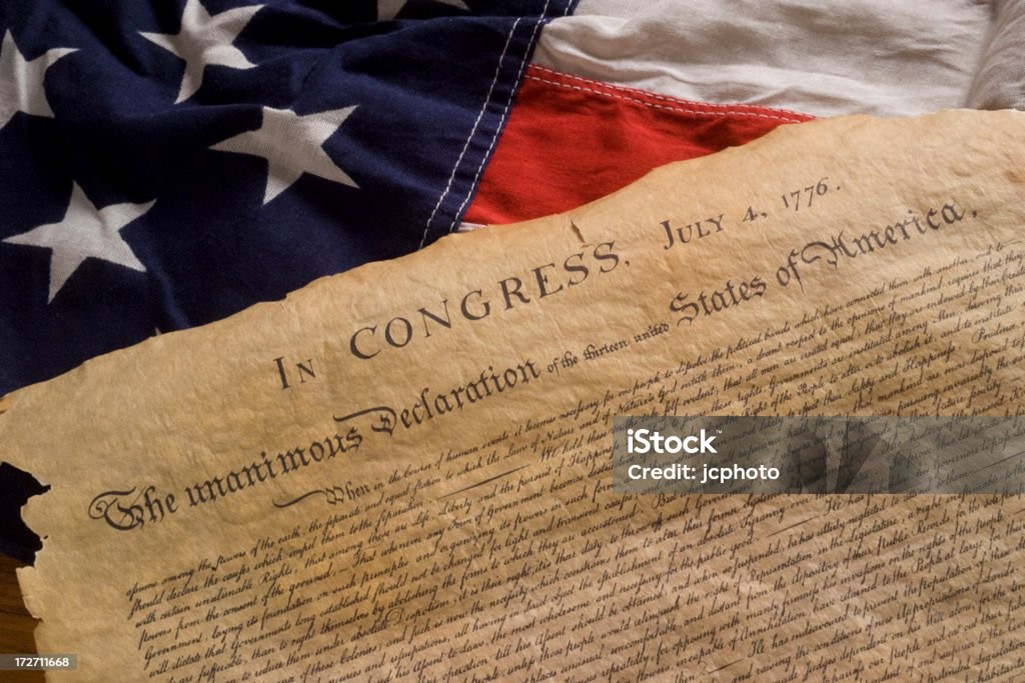
The first draft of the Declaration of Independence written by Thomas Jefferson contained a 168 word section lambasting King George III for slavery in the colonies. Here it is:

“ He [King George III] has waged cruel war against human nature itself, violating its most sacred rights of life & liberty in the persons of a distant people who never offended him, captivating and carrying them into slavery in another hemisphere, or to incur miserable death in their transportation thither, this piratical warfare, the opprobrium of infidel powers, is the warfare of the CHRISTIAN king of Great Britain, determined to keep open a market where MEN should be bought & sold, he has prostituted his negative for suppressing every legislative attempt to prohibit or to restrain this execrable commerce: and that this assemblage of horrors might want no fact of distinguished die, he is now exciting those very people to rise in arms among us, and to purchase that liberty of which he has deprived them, & Murdering the people pon whom he also obtruded them; thus paying off former crimes committed against the liberties of one people, with crimes which he urges them to commit against the lives of another. (Library of Congress)

This didn’t even make it to the whole Continental Congress, only to a select committee. Jefferson said north and south representatives voted to remove it. Apparently, the only states willing to accept it were the Mid-Atlantic States!

Some people jump to the conclusion that it was removed because those states participated in the shipping and sale (north) or use of slaves (south, mostly). They give no support to their opinion. It could also be because the representatives, still hoping for a peaceful separation, felt Jefferson’s language too extreme.

By the way, notice Jefferson’s use of the word “men.” This answers the question of what “men” means in “all men are created equal.”

Categories
History

It Was Illegal to Educate Slaves

Not only was it legal until the Nat Turner rebellion, sometimes the slave was educated with the master’s children. Everyone in the colonies was expected to learn reading so he or she could read the Bible.

Some, who were exceptionally talented, were educated in advanced studies. Each one who stood in the spotlight was a spokesperson for the intelligence and talents of their race.

A case in point is Phyllis (named for the slave ship) Wheatley (her master’s surname.).

Phyllis was a poet so talented that she toured Europe. She was the first American slave, the first person of African descent, and the third American colonial woman to be published.

Her life of 1753-1784 spanned the American Revolutionary War. Here are some of her poems:

  1. On Being Brought from Africa to America: This poem describes her Christian perspective that “everything works together for good to those who love God and are called according to His purpose.” She doesn’t like enslavement, but credits her abduction with learning about the Christian faith and how to get to heaven.

“Remember, Christians, Negros, black as Cain,

May be refined, and join th’ angelic train.”

  1. To the King’s Most Excellent Majesty. 1768: This poem expresses loyalty to King George III and appreciation for the good things he does, especially the recent repeal of the Stamp Act.
  2. To the Right Honourable William, Earl of Dartmouth, his Majesty’s Principal Secretary of State of North-America, &c: In this poem, she expresses hope that Dartmouth will be kinder and fairer than his predecessor. She relates her slavery to the experience of the colonists that has hopefully now ended.

…That from a father seiz’d his babe belov’d:

Such, such my case. And can I then but pray

Others may never feel tyrannic sway?

  1. His Excellency General Washington: “Proceed, great chief, with virtue on thy side…”

After publication of her first book, she was set free. She married a free black man. They had three children who seem to have died in infancy. They were always dirt poor. Her husband at one time occupied a cell in a debtor’s prison.