Categories
History

European Revolutions Did Not Affect the Civil War

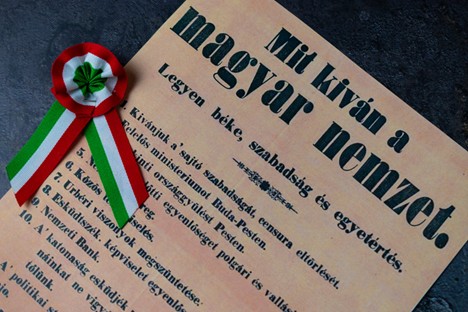
flyer and ribbon

This is another case of important information that was ignored during my schooling.

Revolutions and calls for independence flamed all across Western Europe. Activists looked at the United States for inspiration, although all they saw was the downtrodden rising. There was a great deal more to the United States’ revolution.

Anyway, war was constant in Europe between 1830 and 1860. For the most part, monarchies retained their rule. Revolutionaries who escaped with their lives were expelled from the kingdoms or decided that it was a wiser to emigrate. They traveled to many places, but a good number of them came to the United States. They brought their ideas of revolution, which were not the same as ours. They also tended to be extremely violent people.

There was no immigration screening as yet and no borders, so they slipped in easily and made lives for themselves. Once settled, they pursued activist causes, which is fine, except they tended to prefer violent courses, believing that only violence could bring the end they wanted.

When the civil war came, many immigrants, including the revolutionaries, joined the army of the United States. There were entire companies of revolutionaries. They, like non-revolutionary immigrants, spoke their native language in the company. There were dozens of officers that were German Marxists. (I have seen two sources that listed the officers’ names, but I have not independently corroborated this yet.)

Some joined, believing they were saving the great republic they admired. Some were tricked into serving, being offered a “job” with housing and a paycheck as soon as they were off the boat from Europe, and some were paid replacements for the Union wealthy who supported the war, but refused to serve in the army.

Although I have not yet found corroborating evidence, I can see these men feeling at home with Sherman, Sheridan, and Butler the Butcher.
Categories
History

States’ Rights was used to bolster Slavery

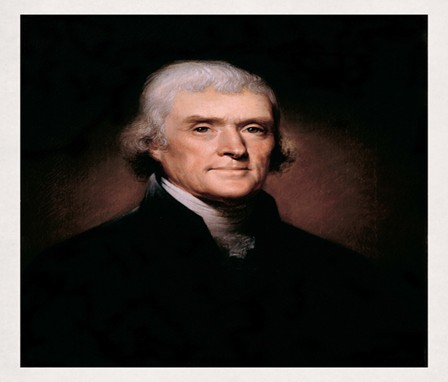
Thomas Jefferson: Father of States' Rights
Thomas Jefferson: Father of States’ Rights

States’ Rights was much larger than the issue of slavery. From the earliest years of the country, politicians had separated into two camps: Jefferson and States’ Rights vs. Hamilton and Federalism (supremacy of a national government).

As we saw in an earlier blog post, the United States was established under states’ rights. This was logical because a state is an independent political entity. It is not part of a country, because it is one.
These arguments continued into the antebellum years. For instance, a great congressional debate in 1830 on the subject was argued by the great orator Webster from Massachusetts and the congressman from South Carolina. It’s remembered not for content as much as the oratory skill of Webster.

What I am saying is that States’ Rights is the overall argument, as the Confederacy declared. Slavery was only one policy in the disagreement.

Categories
History

The National Road Impacted Business and Settlement

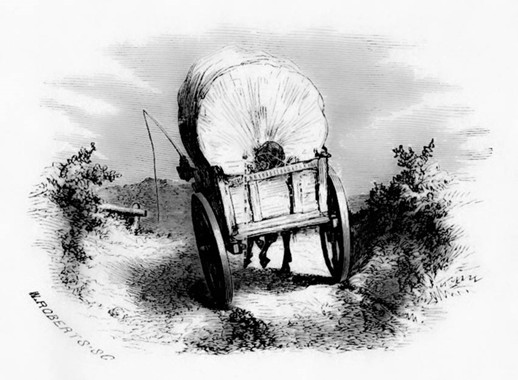
wagon b&w illustration

However, when the National Road reached Indiana in 1829, its impact on that state was enormous culturally.

You see, there was a Black Swamp between northern and central Indiana and Ohio. It was called the Black Swamp because it was so thick that light could not penetrate the canopy of trees. You couldn’t see your hand in front of your face. It also emitted swamp gas that made it dangerous to travel with a flame to light your way.

The result of this swamp was that Ohio residents coming to Indiana had to go north to Lake Michigan or south to the Ohio River to travel easily into Indiana. For this reason, Indiana was almost exclusively a Kentuckian culture and spoken dialect until the National Road came.

The settlers from the east brought their ideas and politics. They clashed with those of Indiana and set up serious violence during the Civil War.

Categories
History

There Was No Abolition Activity in the South

chains to birds/freedom image

This was not true.

It is true that the first abolitionist, society was established in 1777 in Pennsylvania and was a Quaker institution.

Quakers, themselves, owned slaves such as the famous poet Phyllis Wheatley. According to their beliefs as pacifists, their methods were peaceful: sermons, pamphlets, and other means of gentle persuasion. Appropriately, they began with their own meetings.

Quakers lived mostly in the north, but some lived in the future Confederate States of Virginia, North Carolina, and Tennessee, and bore witness in those states.

In 1827, Benjamin Lundy, who was a Quaker, abolitionist, and newspaper publisher, moved to Ohio and began the first abolitionist society west of the Appalachian Mountains. He went on tour and started 130 abolition societies. One hundred were in the South.

Enough said. chains to birds/freedom image

Categories
History

The North West Territory States Welcomed Blacks

North West Territory States Map

There is a huge difference between being a free state and welcoming blacks into the state.

I know most about Indiana and Ohio, so I will talk about them as examples.

It is true that all states previously part of the North West Territory were established as free states. This meant that slavery could not exist in those states.

It did not mean that blacks were welcome. You see, the overwhelming belief in the United States was that it was destined to be a country of western European Christians. Free states were meant to be rid of Indian nations and of blacks. Period.

The South needed new land because crop rotation was usually not practiced, and the Deep South land was producing less. They also believed that all land of the United States was to be a land of western European Christians, but blacks were acceptable as slaves/servants. Indian nations were not acceptable.

In the north, more and more people had never seen a black person. They were easily persuaded by stereotypes of animal behavior and intelligence. Indiana set a head tax on blacks entering the state of $300 in gold. That’s three years wages for a white laborer. It was impossible for a free black.

Many immigrants came from political states that had slavery, which, in fact, was almost all of the world. Most of the immigrants entered through New England harbors.

Indiana and Ohio shared the Ohio River with slave states. Indiana was settled by an influx of Kentuckians, with only a relatively few immigrants coming through the Great Lakes. Ohio was also impacted from the south, but also from the east.

Indiana was not happy that blacks from Kentucky ravished the local and state coffers. Bad masters sent unwanted slaves across the Ohio River and dumped them: the old, the ill, the disabled. Indiana had to pick up the tab.

And then when Kentucky masters moved to the state, there was the cost of court cases. Although there were few, it still angered the state capital of Corydon, located in southern Indiana. Even when the black person won freedom, it was another black person, now free, in Indiana. Poor whites saw that as competition for their jobs because blacks were paid less for the same work.