Categories
History

Nat Turner’s Revolt Was of Limited Importance

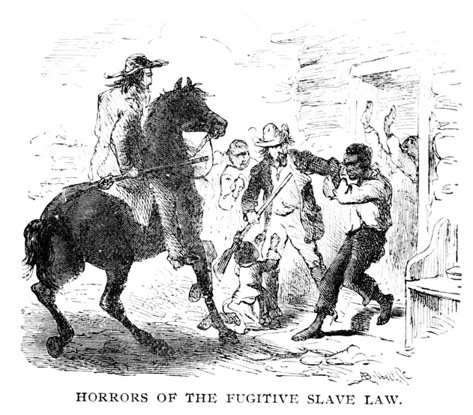
Nat Turner Revolt Illustration

And so it would seem by the short time it was taught in class and the small amount of space describing it in the textbook.

What I Learned

The short version is this: The slave Nat Turner, a preacher and self-proclaimed prophet, observed signs in the sky and said he experienced visions which he interpreted as calling him to eradicate slavery.

From August 21-22 in Southampton County, Virginia, he and his men killed 55 men, women, and children. Turner’s men were killed or detained within a few days. Nineteen were hanged. Twelve had their sentences commuted by the governor because of extenuating circumstances, such as their youth. Turner was captured on October 30 and hanged November 11.

The result of Turner’s actions was psychological terrorism of the local population and, to a lesser extent, to all communities with a significant number of black inhabitants. In response to Turner’s revolt, laws were passed that severely limited Negro rights.

Reviewing the Times

Everyone knew about successful events of rebellion on shipboard and in the Caribbean, one resulting in an African-American nation.

In the early 1830s, southern states were writing laws to protect slaves from misuse.

Blacks could be called as witnesses in some cases, but not to serve on juries.

Plantation owners did not expect “our people” to revolt against, much less murder, their master’s family. They counted on the slaves’ loyalty because of kind treatment. However, whites were keenly aware of how many more blacks there were, especially on plantations.

What Were the Results of Turner’s Revolt?

  1. An immediate backlash of whites killing blacks indiscriminately (about three dozen).
  2. Laws were enacted in southern states to restrict freedom of blacks.
  3. Lincoln would have known of this revolt and its failure. He was twenty-two, starting out on his own, and just dipping his toe into politics. He was born in Kentucky, lived in Indiana which was initially settled by Kentuckians, and later resided in Illinois, which territories were sympathetic to the slave states. Yet, Lincoln employed the same strategy in the Emancipation Proclamation!

Resources Available

I found very few resources, and not all of them were good.

The Confessions of Nat Turner, the Leader of the Late Insurrection in Southampton, Virginia is a written copy of Turner’s confession to the author, Gray. It is in too much detail to summarize here. Here are some questions I had:

  1. How do I know this confession was voluntary? Nat pleaded not guilty. The booklet contains a note that it is “as fully and voluntarily made to Thomas R. Gray in this prison where he [Turner] is confined, and acknowledge by him to be such when read before the Court of Southampton.” It is sealed by the Clerk of the District as deposited and “is a true copy from the record of the District Court.”
  2. Can I read the booklet for myself, and why didn’t my teacher assign the reading of this primary source? I cannot answer the second question. The booklet can be read at https://docsouth.unc.edu/neh/turner/turner.html .
  3. Is there proof that the confession was read to the court? Yes. In a statement by the six justices of the peace presiding as members of the court hearing the case of Nat Turner and verified by their seals on the document, they acknowledge that and also that he said he had no defense against the death sentence besides what he had told Mr. Gray. Furthermore, James Rochelle, Clerk of the County Court, placed his seal on the above document, testifying that these men were, indeed, members of the court trying Turner.
  4. Why did Turner plead not guilty yet also acknowledge his confession in court? Turner replied that he was pleading not guilty “because I did not feel so.”
  5. How much of the confession was edited, perhaps for clarity. In an author’s note, Gray states that he “published them, with little or no variation, from his own words.” This note was also under seal. In that case, Turner is a remarkably good speaker, quite believable from a preacher.
  6. What did Gray think of Turner? Is there a bias? In the same note as above, Gray describes Turner as a “gloomy fanatic” having a “dark, bewildered, and overwrought mind.” Could it be that Turner was mentally ill during the planning and execution of the revolt?

What did the firebrand pacifist Garrison think of the Nat Turner Revolt? According to “The Agitator” article by the National Endowment of the Arts, Garrison wrote,” I do not justify the slaves in their rebellion; yet I do not condemn them, and applaud similar conduct in white men.” https://www.neh.gov/humanities/2013/januaryfebruary/feature/the-agitator

A History of Racial Injustice includes a short article about Nat Turner. The trial is called “rushed.” I wonder if this source is biased.

  1. Was it? One guarantee of justice is a speedy trial. Secondly, evidence had been gathered about him from all of the trial of his co-conspirators. Thirdly, Turner had confessed in detail and acknowledged the confession in court. Fourth, there were no defense witnesses to call. Fifth, when asked why he confessed and yet pled not guilty, Turner’s answer was because he did not feel guilty. It is possible to have a rapid trial that is just.
  2. “Conditions of enslavement worsened for thousands of enslaved Black people as more cruel, barbaric, and traumatizing forms of control were implemented.” Considering that laws were going on the books in southern states to prevent actual cruelty to slaves, this is a distorted statement.

“Nat Turner’s Rebellion: Horrific or Heroic?” on America’s Black Holocaust Museum is a much better article because of its frequent references. However, the wording is very biased, as well as the refusal to consider more than one option. See what you think: https://www.abhmuseum.org/nat-turners-rebellion-horrific-or-herotic

  1. Turner was literate. Why didn’t he write his own confession? Good question. Maybe he was on suicide preventions and not allowed sharp pens and pencils. Maybe it was because Turner knew he had no connections to publishers. I don’t know. Nobody asked him.
  2. Gray transcribed and published the confession because he was in debt and knew the booklet would sell. So? That does not mean it is not reliable.

“Nat Turner’s Revolt (1831) by Encyclopedia Virginia is a very good overview of the revolt, although much is from Confessions of Nat Turner. In its words, the article is sometimes biased, such as calling Turner a “self-styled” prophet, however it’s overall good. https://encyclopediavirginia.org./entries/turners-revolt-nat-1831

  1. Was there any other reason that Turner revolted? This article suggests an interesting, although unsupported, option. “In February 1831, just days before Turner approached his future conspirators, Reese’s son John W. signed a note the put Turner’s son up as collateral for a debt that he, Reese had struggled to pay.”

So, that’s what we know. What do you think is the truth?

Categories
History

The Liberator Greatly Influenced the Civil War

newspaper freedom headline

Three fourths of the subscribers were black.

But the publisher of The Liberator cast a much greater shadow by also writing pamphlets and speaking at events: extremist abolitionist events. On his last trip to Europe in 1867, William Lloyd Garrison was hailed as “the preeminent agitator of the century.”

What makes an agitator?

Garrison was born in Massachusetts with its history of Puritanical piety and a mother who exemplified it. After some false starts, he found his niche as a “printer’s devil” on a newspaper. He contributed anonymous articles. Seeing his words and views in print was a heady experience.

He also absorbed his master’s philosophy of journalism: Newspapers “ought to be made the vehicle, and a most effective one, too, for disseminating literary, moral, and religious instruction.”

In 1828, Garrison connected with Benjamin Lundy. We talked about him earlier: the man who began more than 100 abolitionist societies, north and south. Garrison envisioned himself as the Lundy of the future.

Although I have not found that Garrison was a Quaker, he did consider himself a pacifist. I leave to you whether you agree with him.

Taking an editorial position at another newspaper, Garrison reworked its look and radicalized its message. He attacked anyone whom he deemed to be on the wrong side of abolition. He ripped apart arguments defending slavery as benevolence. But he most vehemently attacked complacency in the north, whether they espoused gradualism or colonization.

Garrison’s job evaporated after six months when he was jailed for slandering a merchant involved in the domestic slave trade.

The Liberator

This newspaper was first produced in Washington D.C., probably to be closer to the national political scene. However, it did not work out and Garrison returned to New England. There he found “comtempt more bitter, opposition more active, detraction more relentless, prejudice more stubborn, and apathy more frozen, than among slave owners themselves.”

The Liberator’s first issue, dated January 1, 1831, contained Garrison’s purpose statement. “I determined, at every hazard, to lift up the standard of emancipation in the eyes of the nation, within sight of Bunker Hill and in the birth place of liberty…Let southern oppressors tremble-let their secret abettors tremble-let all the enemies of the persecuted blacks tremble…I am aware, that many object to the severity of my language; but is there not cause for severity? I will be harsh as truth, and as uncompromising as justice. On this subject I do not wish to think, or speak, or write, with moderation. No! no! Tell a man whose house is on fire, to give a moderate alarm; tell him to moderately rescue his wife from the hands of the ravisher; tell the mother to gradually extricate her babe from the fire into which it has fallen; but urge me not to use moderation in a cause like the present. I am in earnest-I will not equivocate-I will not excuse-I will not retreat a single inch-AND I WILL BE HEARD.”

Effective Speaker

On July 4, 1854 at the Massachusetts Anti-Slavery Society’s Independence Day picnic, Garrison set fire to a copy of the Constitution. He called it “a covenant with death…and an agreement with hell.”

At this point, he believed in immediate, absolute, and unpaid emancipation, the secession of the North on moral grounds, and violent uprisings in the South.

Results

  1. We get an interesting look at black life in Boston.
  2. The public was challenged to think through its views.
  3. Readers were inspired to action personally and through abolition societies.
  4. The paper became the voice of radical abolitionism.
  5. Blacks were encouraged to submit articles, letters to the editor, and other works. These were enthusiastically printed in the paper.
  6. Using the tradition of newspaper exchange, by which editors sent complimentary copies of their latest numbers to each other, Garrison reprinted articles he liked, giving them more exposure especially to Black Americans. He reprinted articles he disagreed with, adding ferocious comments and arguments.
  7. We have Garrison’s comments on the news of the day from a radical abolitionist view.
  8. Locally, The Liberator assisted the Underground Railroad by reporting on fugitive slave cases and assistance organizations. The building also housed donations, clothing, information, referrals to job opportunities, and sometimes fugitive slaves.

https://www.nps.gov/articles/000/the-liberator.htm
https://www.theliberatorfiles.com/garrison-preeminent-agitator-of-the-century
https://www.neh.gov/humanities/2013/january/february/feature/the-agitator


Categories
History

Darwin Had Nothing to Do with the Civil War

evolution illustration

Darwin sailed on the Beagle in 1831. He subsequently would organize his findings into the Evolutionary Theory in 1838. Publication of The Origin of Species in 1858 was immediately sold out, indicating that there was enormous interest and discussion around it. Plus, it was condemned by the Christian church, both Protestant and Catholic.

The vaunted (and overstated) closeness between man and ape in Darwin’s theory was immediately used to “prove” the “scientific basis” for slavery.

It was argued that because everything—including humans—continued to evolve, it was logical that the three races (oriental, occidental, and negroid) occupied different points on the evolutionary journey.

It was further argued that by simple observation, it was obvious that the order of evolution was occidental (white) as the most evolved, then the oriental race. The negroid race was clearly the least developed and in need of direction and supervision until it was ready to “join the human race.”

Realize that this was the belief of the great majority of Americans, north and south. The blacks were not yet quite human. They were closer to apes than to white people.

Thus, science was added to the Bible, whose note that “Ham shall serve his brothers” was interpreted as a command instead of a statement of fact, to build a case for slavery of the black population.

Categories
History

Jim Crow Was Created by the Ku Klux Klan

illustration: person and birds on bench

Sorry. No. Jim Crow was not even created by a southerner.

The original Jim Crow character was a trickster like Loki in Norse mythology. Jim Crow was invented by the black culture and had been around for decades before the character was kidnapped and changed by the Father of American Minstrelsy, Thomas “Daddy” Dartmouth Rice. The song “Jump Jim Crow” was also of African-American origin.

Rice said that he was inspired by a crippled black stable groom who sang and danced while he worked. Blackface minstrelsy was already popular. Rice created a caricature of African- Americans as being lazy, shiftless, watermelon stealing, impudent, uneducated, and stupid.

Jim Crow became Rice’s signature act by 1832. It made him rich and famous. This is decades before the Ku Klux Klan. Rice was from New York, so the Jim Crow stereotype was not originated by a southerner.

Minstrelsy was low (cheap quality) comedy for the masses. Using blackface was common, as were stereotypes of all kinds of people. In that sense, Jim Crow was not unusual.

Here’s why Jim Crow mattered: Many people in the north had never met a black person. The Jim Crow character was all the information they had, so the stereotype was believed to be truth by many northerners. Also, the name Jim Crow was applied to post-Reconstruction laws and programs promoting oppression of African-Americans, but which had no actual connection to the character of Jim Crow.

Categories
History

Mormonism Had Nothing to do with the Civil War

In March 1830, the Book of Mormon was published in Palmyra, New York. In April, the Church of Latter Day Saints was organized. Are you surprised that Mormonism began in New England?

To begin in New England was to receive maximum attention immediately. It was well covered in newspapers and church property.

For the newspapers, it was juicy because of its command to practice polygamy and the equally juicy blazing condemnation of heresy from every denomination. Ecumenism at last! At least on this topic. And that meant a huge increase in the number of newspaper copies sold.

But what does Mormonism have to do with the Civil War? The connection is indirect.

Throughout the flood of articles and books covering Mormonism and specifically polygamy (including a 1000 page tome in my personal library!) is the correlation drawn between polygamy and slavery, in that people simply could not understand how any red-blooded American girl would participate in polygamy without being forced into it by the men.

The next step was when early women’s rights advocates loudly proclaimed that polygamy was not unique. It was only one way that women in America were enslaved to the men in their lives under an unjust system of laws which were created, voted on, and enforced by men.

And with the repeated word of “slavery” as related to women, the connection to Negro slavery was unavoidable. Activists of all stripes: social, political, and journalistic congealed around the expanded use of the word slavery.

Categories
History

The Civil War Began at Fort Sumter

Trade: Deal / War

This is one of many lies by omission. True historians admit that there are many candidates for the title, depending on what is meant by “began the Civil War.”

Here are the biggest three: Northerners often blamed it on the secession of South Carolina, arguing that without the secession, the re-supply of Fort Sumter would not have been an issue.

The Lincoln Administration pushed the CSA firing on Fort Sumter as the beginning of the war.

But the South has a longer memory. It point to the beginning of abuse of the Constitution by what it called the Treaty of Abominations.

Realize that in 1828, the south controlled the majority of imports and exports because they grew crops valued by the world: tobacco and, first and foremost, cotton. The north struggled with imports and exports, especially after the law against the slave trade. Their lands were not optimal for growing those prize crops.

Another factor is the enormous influence of New Englanders with their wealth and their connections socially, industrially, and politically.

So what’s in the 1828 Treaty of Abominations, and why did it upset southerners?

It’s actually called the Treaty of 1828. It was the South that called it the Treaty of Abominations. The new country had imposed tariffs previously to pay down the national debt of the Revolutionary War. But there were three important differences in this treaty:

1. There was no stated common purpose for the tariff.

2. The amount of this tariff went as high as 50% to protect New England’s industries.

3. The tariff did not benefit all of the states. The federal government represented all of the states. Its policies should have been good for all. But this treaty was good for the New England and Mid-Atlantic states at the expense of the Southern economy.

The South had direct economic ties to Great Britain. Tobacco and cotton were extremely popular products. However, as the prices went up with the Tariff of 1828, demand dropped.

Also, the south was trying to increase mechanization. Machines were bought from Britain because New England could not compete in free trade. It was easier for the South to trade tobacco and cotton directly with Britain for machinery and other manufactured goods.

With the tariff, the prices were so high that the South could not purchase the machines it needed, extending the need for slave labor as an economic necessity beyond expectations.

The result of the Treaty of 1828 was an explosion across the South. Although the percentages of the tariffs were lowered in the next tariff act, one following it reintroduced high rates.

Results included South Carolina’s first stab at secession. (She was not the first to do so. Massachusetts and other states had also explored this option for various reasons. No one had been upset about those threats.)

The doctrine of Nullification, propounded by Vice President Calhoun, lit the explosion. The Nullification Doctrine stated that if the federal government could annul state laws that infringed on constitutionally named responsibilities, then states could nullify federal laws that applied to areas not ceded to the federal government by the Constitution.

South Carolina nullified the 1828 treaty and the following one. In 1833, the treaty with lowered tariff rates was passed and also the Force Act empowering the President to collect tariffs by force, if necessary. South Carolina removed the nullification acts on the earlier treaties, since the new rates were now acceptable, then nullified the Force Act.

There is a theory that all wars begin with money, or in a wider sense wealth including land. In the Southern point of view, this was true of the Civil War.

Categories
History

European Revolutions Did Not Affect the Civil War

flyer and ribbon

This is another case of important information that was ignored during my schooling.

Revolutions and calls for independence flamed all across Western Europe. Activists looked at the United States for inspiration, although all they saw was the downtrodden rising. There was a great deal more to the United States’ revolution.

Anyway, war was constant in Europe between 1830 and 1860. For the most part, monarchies retained their rule. Revolutionaries who escaped with their lives were expelled from the kingdoms or decided that it was a wiser to emigrate. They traveled to many places, but a good number of them came to the United States. They brought their ideas of revolution, which were not the same as ours. They also tended to be extremely violent people.

There was no immigration screening as yet and no borders, so they slipped in easily and made lives for themselves. Once settled, they pursued activist causes, which is fine, except they tended to prefer violent courses, believing that only violence could bring the end they wanted.

When the civil war came, many immigrants, including the revolutionaries, joined the army of the United States. There were entire companies of revolutionaries. They, like non-revolutionary immigrants, spoke their native language in the company. There were dozens of officers that were German Marxists. (I have seen two sources that listed the officers’ names, but I have not independently corroborated this yet.)

Some joined, believing they were saving the great republic they admired. Some were tricked into serving, being offered a “job” with housing and a paycheck as soon as they were off the boat from Europe, and some were paid replacements for the Union wealthy who supported the war, but refused to serve in the army.

Although I have not yet found corroborating evidence, I can see these men feeling at home with Sherman, Sheridan, and Butler the Butcher.

Categories
History

States’ Rights was used to bolster Slavery

Thomas Jefferson: Father of States' Rights
Thomas Jefferson: Father of States’ Rights

States’ Rights was much larger than the issue of slavery. From the earliest years of the country, politicians had separated into two camps: Jefferson and States’ Rights vs. Hamilton and Federalism (supremacy of a national government).

As we saw in an earlier blog post, the United States was established under states’ rights. This was logical because a state is an independent political entity. It is not part of a country, because it is one.
These arguments continued into the antebellum years. For instance, a great congressional debate in 1830 on the subject was argued by the great orator Webster from Massachusetts and the congressman from South Carolina. It’s remembered not for content as much as the oratory skill of Webster.

What I am saying is that States’ Rights is the overall argument, as the Confederacy declared. Slavery was only one policy in the disagreement.

Categories
History

The National Road Impacted Business and Settlement

wagon b&w illustration

However, when the National Road reached Indiana in 1829, its impact on that state was enormous culturally.

You see, there was a Black Swamp between northern and central Indiana and Ohio. It was called the Black Swamp because it was so thick that light could not penetrate the canopy of trees. You couldn’t see your hand in front of your face. It also emitted swamp gas that made it dangerous to travel with a flame to light your way.

The result of this swamp was that Ohio residents coming to Indiana had to go north to Lake Michigan or south to the Ohio River to travel easily into Indiana. For this reason, Indiana was almost exclusively a Kentuckian culture and spoken dialect until the National Road came.

The settlers from the east brought their ideas and politics. They clashed with those of Indiana and set up serious violence during the Civil War.

Categories
History

There Was No Abolition Activity in the South

chains to birds/freedom image

This was not true.

It is true that the first abolitionist, society was established in 1777 in Pennsylvania and was a Quaker institution.

Quakers, themselves, owned slaves such as the famous poet Phyllis Wheatley. According to their beliefs as pacifists, their methods were peaceful: sermons, pamphlets, and other means of gentle persuasion. Appropriately, they began with their own meetings.

Quakers lived mostly in the north, but some lived in the future Confederate States of Virginia, North Carolina, and Tennessee, and bore witness in those states.

In 1827, Benjamin Lundy, who was a Quaker, abolitionist, and newspaper publisher, moved to Ohio and began the first abolitionist society west of the Appalachian Mountains. He went on tour and started 130 abolition societies. One hundred were in the South.

Enough said. chains to birds/freedom image