Categories
History

American Slavery Ended with the Civil War

flag behind scales of justice statue

This is another example of twisting truth.

By 1772, all of the thirteen colonies embraced slavery legally. Massachusetts was first. Virginia was fourth, and the first southern state to legalize it.

The legality of slavery was exploded by the 1772 British law case of Somerset vs Steuart. https://www.english-heritage.org.uk/visit/places/kenwood/history-stories-kenwood/somerset-case/

Based on a case during the Elizabethan era, it was argued that slavery could not exist under the Magna Carta provision of habeas corpus. The ruling was that there was no basis for slavery under British common law and, therefore, slavery could not be enforced. However, slavery was not abolished at this time because it was directly addressed by this case.

The effect in the American colonies was explosive, since they operated under British law. Because slavery was unenforceable, laws related to it had to be revised or it would cripple the plantation system and even smaller businesses.

The revision changed slavery as practiced in the American colonies from the labor category of “slavery” to “involuntary servitude.” Thus, prior slaves were equivalent to apprentices, except that their term of service was lifelong and hereditary.

Prior slaves had been often treated as servants already in many households complete with the legal rights. Like apprentices, however, the rights were limited to the permission of the master.

The language difference was important. People who wanted to demean blacks still talked in terms of owners and slaves, even niggers. Slavery continued to be used in casual conversation and even in courts for convenience and clarity.

But in genteel southern households, as well as northern ones, the previous slave was called a servant. The plantation owners did not own slaves, they owned the land. He was the master of servants—like the master of an apprentice.

I was taught none of this in school. Were you?

Categories
History

Slaves Were Whipped Mercilessly

whip

Were slaves whipped? Sometimes. So were sailors, students, and children.

During the days of the British colonies in America, whipping was not considered a “cruel and unusual punishment.” Indeed, that phrase did not exist.

Whipping was a moderate measure compared to the medieval penalties dealt out for capital offenses, such as being drawn and quartered or having limbs pulled apart by four horses.

The British Whipping Act of 1530 https://www.britannica.com/topic/flogging was still in force during colonial times. It authorized whipping for theft, blaspheming, poaching, and other minor offenses. Both men and women were whipped, including the insane.

So, you see, during the Antebellum and Civil War Periods, most people upheld the practice of whipping if used judiciously. Judicious use included being limited to a minor offense, by using an appropriate instrument (not the cat-o’-nine-tails), and by limiting number of lashes.

However, abolitionists made spectacular displays of escaped slaves with whipping scars as a way of convincing northerners that slave owners in the south whipped all slaves mercilessly. They omitted the fact that runaway slaves were overwhelmingly slaves of cruel masters.

In fact, many plantation owners did not whip slaves—or anyone else—at all.

As to merciless whipping, the DVD series North and South did a wonderful job of pointing out that men who were cruel to slaves were just bad men. They were cruel to everyone in their power.


Categories
History

British Colonial Slavery

British Flag

During the Civil War, Confederates cried defensively, “Plantation slavery isn’t our fault. We inherited it from the British!”

So, what did Britain contribute to slavery in the United States?

One thing was its system of labor. All land discovered, explored, and claimed in the name of the British monarch belonged to the reigning king or queen. Favored gentlemen were granted royal charters to develop great swaths of land. This was usually in agriculture or mining precious metals or gemstones.

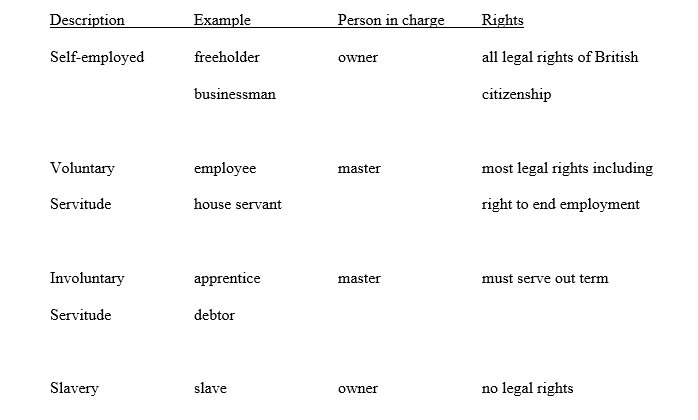
Within the forts and towns that grew on charter land, there were four levels of labor distribution apart from the military.

Table - Descr -Example - Person In Charge - Rights

The first colony, Jamestown, began in 1607. The first black slaves arrived in 1619 and would be used especially in the developing tobacco plantations.

All of the colonies had slaves although the occupations of slaves differed. In southern and middle Atlantic colonies, enormous numbers of slaves were needed for the vast plantations. In New England, plantations were rarely economical because of the poor soil and rougher terrain.

However all colonies used slaves for small farms, household help, personal servants, and skilled labor. In New England, these included indigenous slaves.

The New England states of Massachusetts and Rhode Island were in the business of acquiring and selling African slaves through shipbuilding and slave ship charters.

So, yes, the labor system that included slavery was inherited from the British.


Categories
History

American Slavery: Who Started It?

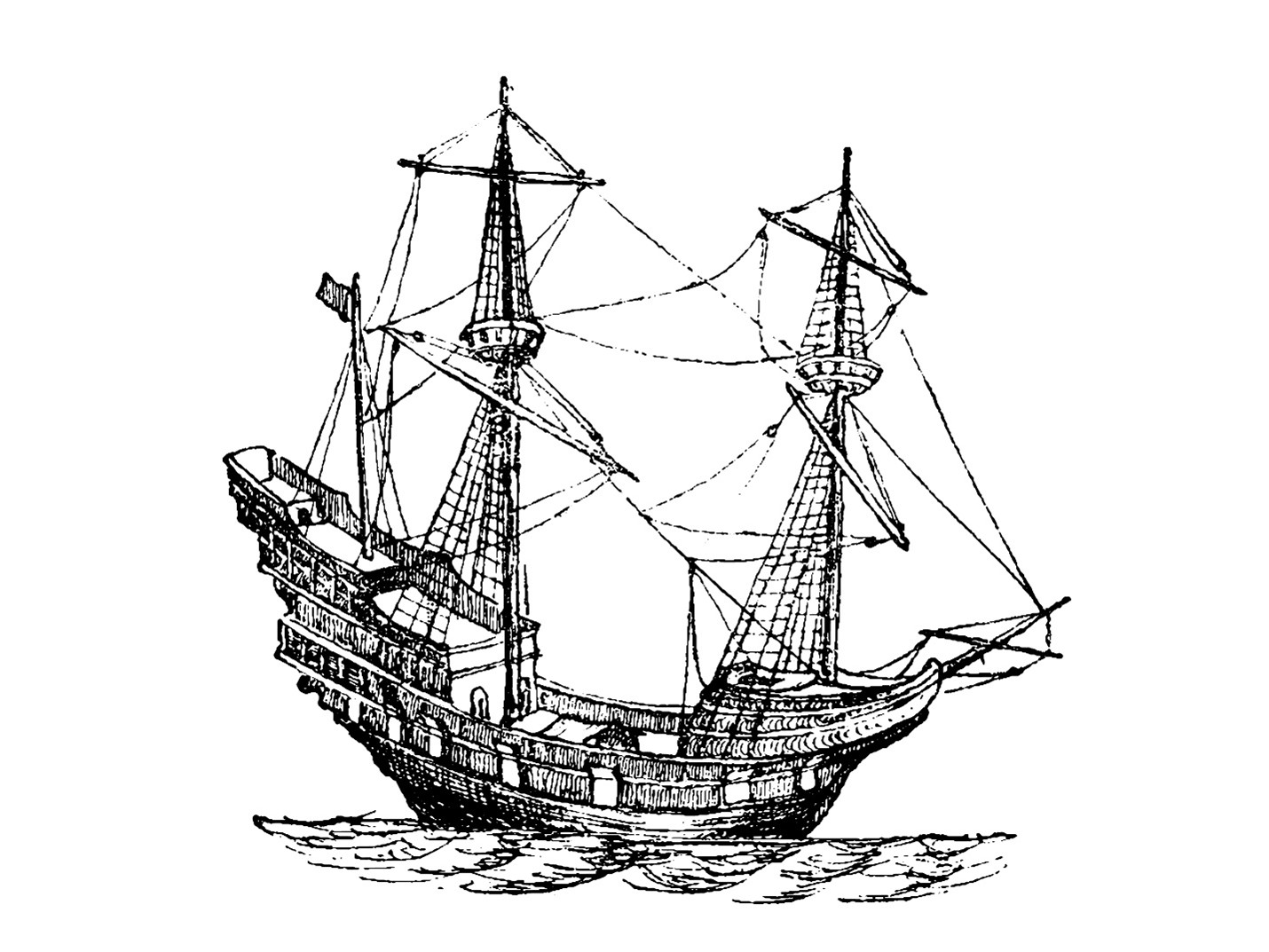
sailing ship

Spain and Portugal fought over the Americas. A treaty in 1494 determined which land belonged to which country, totally ignoring indigenous claims, of course. Portugal was mostly limited to Brazil.

Spain developed the plantation system of agriculture. During this time, the slave route was established. Spanish slave traders made deals with the Yoruba of Nigeria, the Fon of Dahomey, and the Fanti and Shanti of Ghana who already captured slaves through tribal warfare. They were cruel masters whose greed for Spanish trade made slavery into a business.

More slaves died while with the black slavers than died during the dreaded Middle Passage, according to Seabrook. That does not forgive the hideous conditions and abuse on slave ships!

The first African slave insurrection was at Veracruz, Mexico. Between 1570 and 1609, Gaspar Yanga, thought to be a Gabonese prince, led followers from plantation slavery to “star mountain” (the tallest mountain in Mexico) to form an African settlement. In 1600, they were joined by de Matosa’s group of African maroons. Today, a town of 20,000 mestizos still occupies the spot of the settlement. https://www.blackhistoryheroes.com/2011/05/gaspar-yanga-1570-african-slave-revolt.html

This is 78 years after Columbus, and it was not the last resistance.

One more thing: Spanish plantations were planted in Florida in the 1600s and 1700s until Florida became part of the United States of America.

So, I’m wondering why the push for black reparations for slavery is limited to the United States. Why aren’t these African countries included? Why aren’t European countries included in reparations? Is it lack of knowledge? Is it racism that omits reparations from African countries? Or is it greed instead of justice: targeting the USA because she is rich? What do you think?