Categories
History

Darwin Had Nothing to Do with the Civil War

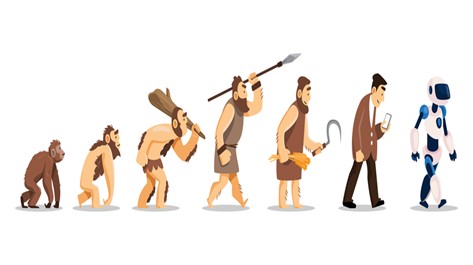
evolution illustration

Darwin sailed on the Beagle in 1831. He subsequently would organize his findings into the Evolutionary Theory in 1838. Publication of The Origin of Species in 1858 was immediately sold out, indicating that there was enormous interest and discussion around it. Plus, it was condemned by the Christian church, both Protestant and Catholic.

The vaunted (and overstated) closeness between man and ape in Darwin’s theory was immediately used to “prove” the “scientific basis” for slavery.

It was argued that because everything—including humans—continued to evolve, it was logical that the three races (oriental, occidental, and negroid) occupied different points on the evolutionary journey.

It was further argued that by simple observation, it was obvious that the order of evolution was occidental (white) as the most evolved, then the oriental race. The negroid race was clearly the least developed and in need of direction and supervision until it was ready to “join the human race.”

Realize that this was the belief of the great majority of Americans, north and south. The blacks were not yet quite human. They were closer to apes than to white people.

Thus, science was added to the Bible, whose note that “Ham shall serve his brothers” was interpreted as a command instead of a statement of fact, to build a case for slavery of the black population.

Categories
History

The Civil War Began at Fort Sumter

Trade: Deal / War

This is one of many lies by omission. True historians admit that there are many candidates for the title, depending on what is meant by “began the Civil War.”

Here are the biggest three: Northerners often blamed it on the secession of South Carolina, arguing that without the secession, the re-supply of Fort Sumter would not have been an issue.

The Lincoln Administration pushed the CSA firing on Fort Sumter as the beginning of the war.

But the South has a longer memory. It point to the beginning of abuse of the Constitution by what it called the Treaty of Abominations.

Realize that in 1828, the south controlled the majority of imports and exports because they grew crops valued by the world: tobacco and, first and foremost, cotton. The north struggled with imports and exports, especially after the law against the slave trade. Their lands were not optimal for growing those prize crops.

Another factor is the enormous influence of New Englanders with their wealth and their connections socially, industrially, and politically.

So what’s in the 1828 Treaty of Abominations, and why did it upset southerners?

It’s actually called the Treaty of 1828. It was the South that called it the Treaty of Abominations. The new country had imposed tariffs previously to pay down the national debt of the Revolutionary War. But there were three important differences in this treaty:

1. There was no stated common purpose for the tariff.

2. The amount of this tariff went as high as 50% to protect New England’s industries.

3. The tariff did not benefit all of the states. The federal government represented all of the states. Its policies should have been good for all. But this treaty was good for the New England and Mid-Atlantic states at the expense of the Southern economy.

The South had direct economic ties to Great Britain. Tobacco and cotton were extremely popular products. However, as the prices went up with the Tariff of 1828, demand dropped.

Also, the south was trying to increase mechanization. Machines were bought from Britain because New England could not compete in free trade. It was easier for the South to trade tobacco and cotton directly with Britain for machinery and other manufactured goods.

With the tariff, the prices were so high that the South could not purchase the machines it needed, extending the need for slave labor as an economic necessity beyond expectations.

The result of the Treaty of 1828 was an explosion across the South. Although the percentages of the tariffs were lowered in the next tariff act, one following it reintroduced high rates.

Results included South Carolina’s first stab at secession. (She was not the first to do so. Massachusetts and other states had also explored this option for various reasons. No one had been upset about those threats.)

The doctrine of Nullification, propounded by Vice President Calhoun, lit the explosion. The Nullification Doctrine stated that if the federal government could annul state laws that infringed on constitutionally named responsibilities, then states could nullify federal laws that applied to areas not ceded to the federal government by the Constitution.

South Carolina nullified the 1828 treaty and the following one. In 1833, the treaty with lowered tariff rates was passed and also the Force Act empowering the President to collect tariffs by force, if necessary. South Carolina removed the nullification acts on the earlier treaties, since the new rates were now acceptable, then nullified the Force Act.

There is a theory that all wars begin with money, or in a wider sense wealth including land. In the Southern point of view, this was true of the Civil War.

Categories
History

European Revolutions Did Not Affect the Civil War

flyer and ribbon

This is another case of important information that was ignored during my schooling.

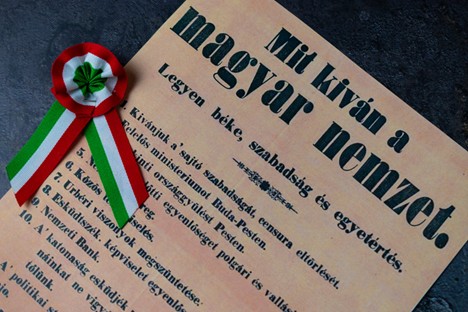
Revolutions and calls for independence flamed all across Western Europe. Activists looked at the United States for inspiration, although all they saw was the downtrodden rising. There was a great deal more to the United States’ revolution.

Anyway, war was constant in Europe between 1830 and 1860. For the most part, monarchies retained their rule. Revolutionaries who escaped with their lives were expelled from the kingdoms or decided that it was a wiser to emigrate. They traveled to many places, but a good number of them came to the United States. They brought their ideas of revolution, which were not the same as ours. They also tended to be extremely violent people.

There was no immigration screening as yet and no borders, so they slipped in easily and made lives for themselves. Once settled, they pursued activist causes, which is fine, except they tended to prefer violent courses, believing that only violence could bring the end they wanted.

When the civil war came, many immigrants, including the revolutionaries, joined the army of the United States. There were entire companies of revolutionaries. They, like non-revolutionary immigrants, spoke their native language in the company. There were dozens of officers that were German Marxists. (I have seen two sources that listed the officers’ names, but I have not independently corroborated this yet.)

Some joined, believing they were saving the great republic they admired. Some were tricked into serving, being offered a “job” with housing and a paycheck as soon as they were off the boat from Europe, and some were paid replacements for the Union wealthy who supported the war, but refused to serve in the army.

Although I have not yet found corroborating evidence, I can see these men feeling at home with Sherman, Sheridan, and Butler the Butcher.

Categories
History

The National Road Impacted Business and Settlement

wagon b&w illustration

However, when the National Road reached Indiana in 1829, its impact on that state was enormous culturally.

You see, there was a Black Swamp between northern and central Indiana and Ohio. It was called the Black Swamp because it was so thick that light could not penetrate the canopy of trees. You couldn’t see your hand in front of your face. It also emitted swamp gas that made it dangerous to travel with a flame to light your way.

The result of this swamp was that Ohio residents coming to Indiana had to go north to Lake Michigan or south to the Ohio River to travel easily into Indiana. For this reason, Indiana was almost exclusively a Kentuckian culture and spoken dialect until the National Road came.

The settlers from the east brought their ideas and politics. They clashed with those of Indiana and set up serious violence during the Civil War.

Categories
History

There Were No Slaves in the “Northern States”

American Civil War 1864 Map

By northern states, I mean states loyal to the United States of America during the Civil War. The answer is yes, there were slaves in the North. In fact, there were more than 450,000 in 1860. Eight northern states and Washington DC practiced slavery while the seven confederate states did so.

The reason was that the states each chose their path toward abolition, and each plan progressed at its own rate. It was much easier for many northern states because their land did not lend itself to plantations, and by the time of the Civil War, all tobacco and cotton plantations had moved to the south. The North could deal with the economic effects much easier than the South. Still, even while progressing on a plan, some states, such as Delaware, had not legally declared abolition of their slaves.

The South knew that abolition was coming, but its path was much more difficult economically. Still, the number of plantation owners was quite small compared to the overall population—but those were the people in the legislature.

As the South continued to look for a path out of slavery, the Civil War erupted and slavery was, of necessity, tabled because of the overall need for defense measures.

Meanwhile, the North’s virtue signaling intensified through the Abolitionists who did not take the North-South differences into consideration and demanded immediate abolition everywhere, although the South was elected to play the bogey-man.

Categories
History

Reconstruction Was the First Plan to Solve the “Negro Problem”

road to the future

Wrong again.

What to do about slavery and the resulting free Negroes was never far from the minds of the public and politicians.

Fernando Fairfax, a prominent Virginian, was the first known individual to write a proposal. It was called the “Plan for liberating the negroes within the united states.” (Notice the capitalization choices.) It is dated “Richmond March 6, 1790.” The text can be found in Encyclopedia Virginia.

Fairfax first reviews the arguments.

Pro-emancipation friends claim their basis on natural right and justice, considering this claim “paramount” to all other considerations. (This will be the stand of abolitionists of the Civil War era.)

The other party agrees with the claim of natural right and justice, but insists on a cohesive policy that also considers “the inconveniences which would result to the community and to the slaves themselves.” These included the right to property legally obtained at the time of purchase.

And in this explanation, we see the conflict of liberal and conservative thinking that continues today.

Liberals see in black and white, and can therefore demand something be done immediately. The results are always “unintended consequences.” Conservatives see in color, considering all shades of the problem. Therefore, they proceed slowly and often offer step by step solutions. They rarely see unintended consequences, because they have foreseen outcomes.

This is why our best government is when liberals and conservatives actually talk to each other. But liberals have no time for thoughtful consideration. They live in the present.

Fairfax next says that the general opinion is for gradual emancipation. So, there are few who agree that slavery should exist perpetually. As a conservative, Fairfax points out the unfairness and illegality of taking a person’s property by force or legislation. Therefore, the states would be required to reimburse the owners. We know that the states, at this point in time, were still struggling with debt incurred by the Revolutionary War and could not reimburse immediate emancipation.

Fairfax says that “it is equally agreed, that, if they be emancipated, it would never do to allow them all the privileges of citizens: they would therefore form a separate interest from the rest of the community.”

Fairfax provides no proof for that statement. He has not explored this from the black point of view at all.

He also states that the one thing that could form a common community would be intermarriage between whites and blacks. He asks which owner, upon freeing a male slave, would allow his daughter to marry that man.

This is faulty logic, but it does show white thinking that would exist in many places well into the 1960s. To Fairfax, this is the final determinant in his argument.

The Fairfax plan is gradually to emancipate slaves, first on a voluntary basis and then, as the states become financially secure, by reimbursement to the owners. All former slaves would be exported to a colony in Africa, to be governed by whites until the blacks show the educated ability to rule themselves thanks to schools established for that purpose.

Fairfax then repulses the argument that England tried this and failed by insisting that the plan did not accomplish the policy. From what Fairfax says, England failed because the slaves were not required to operate within a capitalistic society. What we know as a socialistic society failed, just as it did in the initial years at Jamestown, according to Fairfax.

This plan would actually remain the most popular choice among whites all the way to the Civil War and would be the personal opinion of Abraham Lincoln, as he stated himself on a number of occasions.

https://encyclopediavirgina.org/primary-documents/ferdinando-fairfax-plan-for-liberating-the negroes-within-the-united-states-december-1-1790

Categories
History

Articles of Confederation and Slavery

Drafting Articles of Confederation Stamp

The Articles of Confederation enacted in 1777 was the first attempt at a document of self-governance. The federal government would prove to be too weak to be effective.

Today, we can see it in the function (or dysfunction) of the United Nations. Those who do not learn from history are destined to repeat it.

For our discussion on slavery and the Civil War, the most important point of this document is the choosing of the word “state.”

Why did the representatives endorse the use of “state?” Why not province? Or county? Or parish?

Because “state” relates to an independent power, a nation.

The United States of America could be rendered the United Nations of America. This was a political union of nations primarily for defense and diplomacy. There is no mention of slavery.

It is the definition of “state” that underlies the entire “states’ rights” conversation.

Categories
History

Slaves Were Whipped Mercilessly

whip

Were slaves whipped? Sometimes. So were sailors, students, and children.

During the days of the British colonies in America, whipping was not considered a “cruel and unusual punishment.” Indeed, that phrase did not exist.

Whipping was a moderate measure compared to the medieval penalties dealt out for capital offenses, such as being drawn and quartered or having limbs pulled apart by four horses.

The British Whipping Act of 1530 https://www.britannica.com/topic/flogging was still in force during colonial times. It authorized whipping for theft, blaspheming, poaching, and other minor offenses. Both men and women were whipped, including the insane.

So, you see, during the Antebellum and Civil War Periods, most people upheld the practice of whipping if used judiciously. Judicious use included being limited to a minor offense, by using an appropriate instrument (not the cat-o’-nine-tails), and by limiting number of lashes.

However, abolitionists made spectacular displays of escaped slaves with whipping scars as a way of convincing northerners that slave owners in the south whipped all slaves mercilessly. They omitted the fact that runaway slaves were overwhelmingly slaves of cruel masters.

In fact, many plantation owners did not whip slaves—or anyone else—at all.

As to merciless whipping, the DVD series North and South did a wonderful job of pointing out that men who were cruel to slaves were just bad men. They were cruel to everyone in their power.


Categories
History

British Colonial Slavery

British Flag

During the Civil War, Confederates cried defensively, “Plantation slavery isn’t our fault. We inherited it from the British!”

So, what did Britain contribute to slavery in the United States?

One thing was its system of labor. All land discovered, explored, and claimed in the name of the British monarch belonged to the reigning king or queen. Favored gentlemen were granted royal charters to develop great swaths of land. This was usually in agriculture or mining precious metals or gemstones.

Within the forts and towns that grew on charter land, there were four levels of labor distribution apart from the military.

Table - Descr -Example - Person In Charge - Rights

The first colony, Jamestown, began in 1607. The first black slaves arrived in 1619 and would be used especially in the developing tobacco plantations.

All of the colonies had slaves although the occupations of slaves differed. In southern and middle Atlantic colonies, enormous numbers of slaves were needed for the vast plantations. In New England, plantations were rarely economical because of the poor soil and rougher terrain.

However all colonies used slaves for small farms, household help, personal servants, and skilled labor. In New England, these included indigenous slaves.

The New England states of Massachusetts and Rhode Island were in the business of acquiring and selling African slaves through shipbuilding and slave ship charters.

So, yes, the labor system that included slavery was inherited from the British.


Categories
History

Exposing Biased Civil War Sources

words matter

How do we know that a source is trustworthy?

First, by research the author: his or her education, other books written by this author, awards received, historical knowledge specialty, and what organizations the author joins or supports. Obviously, if the author is a member of the Ku Klux Klan or an activist lawyer for black civil rights, you would read carefully, looking for bias. Nevertheless, the book may still be enlightening!

Examine the bibliography. How extensive is it? How much variety does it contain? Are the sources reliable (as far as can be determined)? Is there a mix of sources from the 1860s and 1870s or are they all secondary sources?

Look at the vocabulary of the book. Careless disregard for the meaning of a word or phrase may actually hide bias.

In Civil War history, a few inaccurate words must be used for clarity. “Civil War” is the most common. Even Southerners use it when speaking to the rest of us because we are not familiar with “Lincoln’s War” or the “War of Northern Aggression.”

But a Civil War is conflict within a nation. That outright denies the claim that the Confederate States of America comprised a separate nation.

Union is often used incorrectly. A union is a voluntary association or organization of people striving to reach mutual goals. Note the word voluntary. Teachers associations for mutual goals where membership is forced is not a union, regardless of their legal names. In Right to Work states, teachers organizations are, in fact, unions.

When the Confederate states left the USA, they formed a separate union. The USA union altered substance to contain only the remaining voluntary states. It was incorrect to say that war was waged “to restore the Union” because war is force, and therefore not voluntary. Nor could war “save the Union.” That Union was already altered. Even when Confederate states were “readmitted to the Union,” it wasn’t true because southerners didn’t want to associate with the north. Legislation passed because almost no prior Confederate whites had voting rights, and the national Congress was completely Republican.

One more example is to use “federals” for USA troops. Federal refers to a national government, as opposed to state governments. While it is true that the USA had both national and state troops, and the national troops could also be called federal troops, the CSA also had federal troops and state militia.

Read carefully. See if words are used correctly and carefully. If not, you must determine if the author is biased, is deceiving the reader with propaganda, or just sloppy. (In which case, what else will the author sloppy with?)

Words matter.

In conclusion, read a wide variety of opinions and approaches to history, but be careful to identify bias and propaganda for what it is.