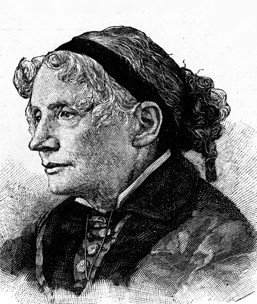
“So you are the little woman who started this big war!” Abraham Lincoln reportedly said to Harriet Beecher Stowe. Actually, that never happened.
The book was an overwhelming bestseller, both in America and in Britain. One million copies were sold in the United States in the first year alone.
Stowe, an avid abolitionist, published it to inspire readers to embrace the abolitionist cause. This was a very unpopular, far left position when she wrote the book in 1852.
So, who were all of these readers?
Abolitionists snapped it up, of course. Beyond that, it was a crackerjack story! I love it! It makes me cheer and it makes me cry. How many non-abolitionist readers became radicals? There is no way to know. Not too many. Abolitionism was still unpopular when the Civil War erupted.
So, did it touch off the Civil War? No.
That said, let’s look at the book as literature.
First, was it historical fiction or contemporary fiction? I’ve found no clue from Stowe, and there are no dates within the book. That makes the casual reader think that the story occurs at or near the time of printing.
Let’s look at a timeline:
Early 1800sAn African-American slave is said to have invented the first machine for help harvesting. This is “George” in the book. We know there were improvements in 1824 and 1836. This is more in line with later book-related dates, but that slave who was African and Native American, unlike George.
1816 Tom Lincoln, father of Abraham, left Kentucky for Indiana. Was he the Tom Lincoln referred to by Stowe? If not, why invent the character? He wasn’t important.
1830s Each state south of the Ohio River and westward passed legislation stating and protecting the rights of slaves. The state congressmen would have included many of the plantation owners, because only they had the time and money to dabble in politics.
1831 The slave trade was abolished. This did not abolish slavery already within the states.
1831 The Nat Turner Rebellion slaughtered whites on several plantations.
1833 Stowe made her only trip from her home in Cincinnati across the Ohio River into Kentucky. While there, she observed one auction and visited one plantation.
1838 The real Eliza crossed the Ohio River on ice blocks to save her son from being sold.
1850 The Compromise of 1850 was passed, which contained the Fugitive Slave Law that inspired Uncle Tom’s Cabin.
1852 Uncle Tom’s Cabin was published.
From this timeline, we can ascertain these points:
- There is no logical date for the story. We don’t know if it is historical fiction or contemporary fiction. She lets readers assume the latter.
- The historical timeline was completely skewed to serve the story. This would never stand in today’s historical fiction.
- The main characters and events were drawn from actual individuals whom she interviewed.
- Her knowledge of auctions and plantations was limited to one trip across the Ohio River in 1833 and descriptions given by interviewees. This indicates that her views of the southern states was likely frozen in time before the states’ slave rights legislation took hold. Reports of interviewees would have verified this in her mind, since the majority escaped cruel masters and a few other escapees ran to avoid being sold down the river. Interviewees did not run from kind masters otherwise. So, in reality, Uncle Tom’s Cabin could be said to be set in 1833.
- Southern plantation owners are portrayed either as evil or as cowards who are absent when slaves they have sold are picked up. She does not mention what is in the congressional record that family servants were not auctioned, but handled as compassionately as possible in private sales.
- Stowe gives the briefest of acknowledgements that the north had anything to do with slavery.
- She notes that Legree was from New England, but does not enlarge on how this affects his behavior. The real Legree, Richard McAlpin, was from Connecticut.
- Ophelia is made to admit that there is not enough interest in the northern states to handle the flood of blacks due to complete abolition. She admits that northern states had a problem of its own with workers caught in the Industrial Revolution. No more is said about either of these points.
- Nothing is said about slavery in the north.
In summary, while this is an intriguing story, it does not meet today’s fiction standards.