Categories
History

There Was No Abolition Activity in the South

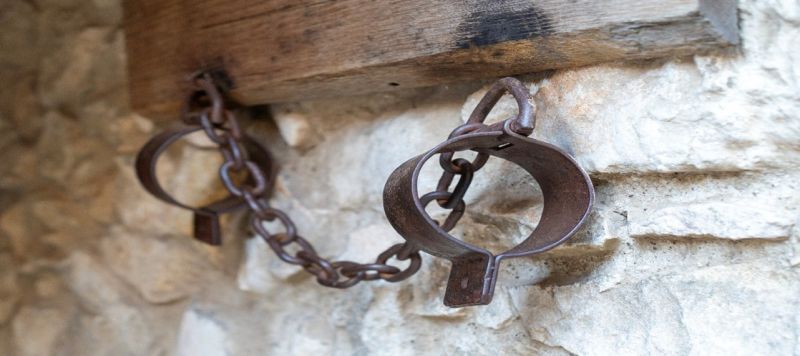
chains to birds/freedom image

This was not true.

It is true that the first abolitionist, society was established in 1777 in Pennsylvania and was a Quaker institution.

Quakers, themselves, owned slaves such as the famous poet Phyllis Wheatley. According to their beliefs as pacifists, their methods were peaceful: sermons, pamphlets, and other means of gentle persuasion. Appropriately, they began with their own meetings.

Quakers lived mostly in the north, but some lived in the future Confederate States of Virginia, North Carolina, and Tennessee, and bore witness in those states.

In 1827, Benjamin Lundy, who was a Quaker, abolitionist, and newspaper publisher, moved to Ohio and began the first abolitionist society west of the Appalachian Mountains. He went on tour and started 130 abolition societies. One hundred were in the South.

Enough said. chains to birds/freedom image

Categories
History

The North West Territory States Welcomed Blacks

North West Territory States Map

There is a huge difference between being a free state and welcoming blacks into the state.

I know most about Indiana and Ohio, so I will talk about them as examples.

It is true that all states previously part of the North West Territory were established as free states. This meant that slavery could not exist in those states.

It did not mean that blacks were welcome. You see, the overwhelming belief in the United States was that it was destined to be a country of western European Christians. Free states were meant to be rid of Indian nations and of blacks. Period.

The South needed new land because crop rotation was usually not practiced, and the Deep South land was producing less. They also believed that all land of the United States was to be a land of western European Christians, but blacks were acceptable as slaves/servants. Indian nations were not acceptable.

In the north, more and more people had never seen a black person. They were easily persuaded by stereotypes of animal behavior and intelligence. Indiana set a head tax on blacks entering the state of $300 in gold. That’s three years wages for a white laborer. It was impossible for a free black.

Many immigrants came from political states that had slavery, which, in fact, was almost all of the world. Most of the immigrants entered through New England harbors.

Indiana and Ohio shared the Ohio River with slave states. Indiana was settled by an influx of Kentuckians, with only a relatively few immigrants coming through the Great Lakes. Ohio was also impacted from the south, but also from the east.

Indiana was not happy that blacks from Kentucky ravished the local and state coffers. Bad masters sent unwanted slaves across the Ohio River and dumped them: the old, the ill, the disabled. Indiana had to pick up the tab.

And then when Kentucky masters moved to the state, there was the cost of court cases. Although there were few, it still angered the state capital of Corydon, located in southern Indiana. Even when the black person won freedom, it was another black person, now free, in Indiana. Poor whites saw that as competition for their jobs because blacks were paid less for the same work.

Categories
History

There Were No Slaves in the “Northern States”

American Civil War 1864 Map

By northern states, I mean states loyal to the United States of America during the Civil War. The answer is yes, there were slaves in the North. In fact, there were more than 450,000 in 1860. Eight northern states and Washington DC practiced slavery while the seven confederate states did so.

The reason was that the states each chose their path toward abolition, and each plan progressed at its own rate. It was much easier for many northern states because their land did not lend itself to plantations, and by the time of the Civil War, all tobacco and cotton plantations had moved to the south. The North could deal with the economic effects much easier than the South. Still, even while progressing on a plan, some states, such as Delaware, had not legally declared abolition of their slaves.

The South knew that abolition was coming, but its path was much more difficult economically. Still, the number of plantation owners was quite small compared to the overall population—but those were the people in the legislature.

As the South continued to look for a path out of slavery, the Civil War erupted and slavery was, of necessity, tabled because of the overall need for defense measures.

Meanwhile, the North’s virtue signaling intensified through the Abolitionists who did not take the North-South differences into consideration and demanded immediate abolition everywhere, although the South was elected to play the bogey-man.

Categories
History

Emancipation Proclamation was First Large-Scale Emancipation

breakikng chains overhead

That is another lie.

The first large-scale emancipation occurred 1782-1790. It didn’t take a constitutional amendment or federal intervention by a proclamation or a law. Each slave was manumitted by his or her owner without coercion. It was the result of promises to revolutionary veterans, the US Constitution, personal ethics, and state laws.

In 1776, the population of the new United States of America was 2.5 million. More than 500,000 blacks were part of that population, including about 450,000 slaves.

In 1782, Virginia led the charge with the 1782 Manumission Act, which allowed owners to free slaves by will or deed. In contrast, Pennsylvania, Connecticut, New York, and New Jersey implemented gradual emancipation. Notice that each state chose its own course.

Gradual emancipation allowed the development of economic knowledge and work skill mastery that would enable the slave to make a decent living without oversight. Thus, for owners taking advantage of this, they would continue to make income from the slave in the meantime and allow owners to adjust economic realities to a free workforce.

The wave of emancipation ended in 1790. In that census, there were 59,000 free blacks in the United States. Of that, Virginia freed at least 20,000.

Categories
History

American Slavery Ended with the Civil War

flag behind scales of justice statue

This is another example of twisting truth.

By 1772, all of the thirteen colonies embraced slavery legally. Massachusetts was first. Virginia was fourth, and the first southern state to legalize it.

The legality of slavery was exploded by the 1772 British law case of Somerset vs Steuart. https://www.english-heritage.org.uk/visit/places/kenwood/history-stories-kenwood/somerset-case/

Based on a case during the Elizabethan era, it was argued that slavery could not exist under the Magna Carta provision of habeas corpus. The ruling was that there was no basis for slavery under British common law and, therefore, slavery could not be enforced. However, slavery was not abolished at this time because it was directly addressed by this case.

The effect in the American colonies was explosive, since they operated under British law. Because slavery was unenforceable, laws related to it had to be revised or it would cripple the plantation system and even smaller businesses.

The revision changed slavery as practiced in the American colonies from the labor category of “slavery” to “involuntary servitude.” Thus, prior slaves were equivalent to apprentices, except that their term of service was lifelong and hereditary.

Prior slaves had been often treated as servants already in many households complete with the legal rights. Like apprentices, however, the rights were limited to the permission of the master.

The language difference was important. People who wanted to demean blacks still talked in terms of owners and slaves, even niggers. Slavery continued to be used in casual conversation and even in courts for convenience and clarity.

But in genteel southern households, as well as northern ones, the previous slave was called a servant. The plantation owners did not own slaves, they owned the land. He was the master of servants—like the master of an apprentice.

I was taught none of this in school. Were you?

Categories
History

British Colonial Slavery

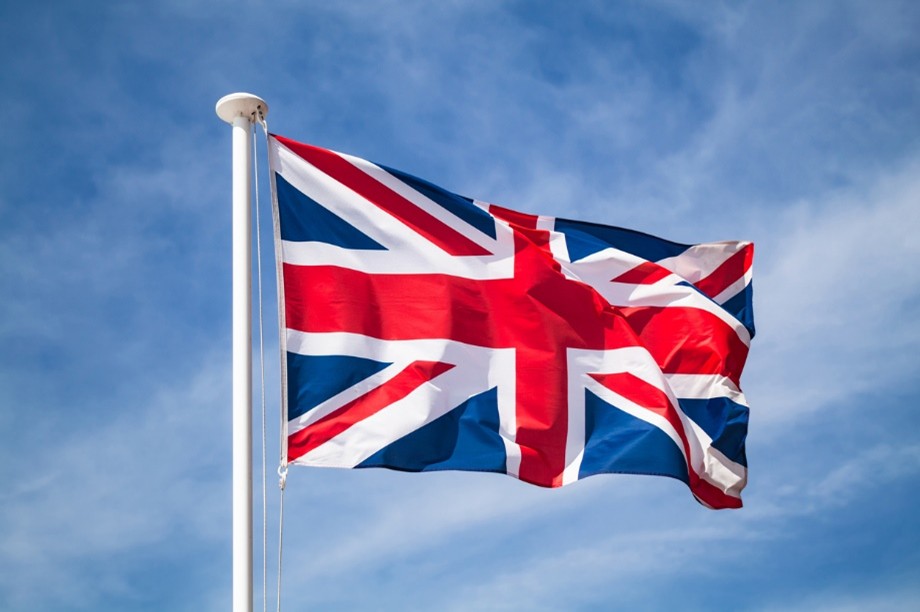
British Flag

During the Civil War, Confederates cried defensively, “Plantation slavery isn’t our fault. We inherited it from the British!”

So, what did Britain contribute to slavery in the United States?

One thing was its system of labor. All land discovered, explored, and claimed in the name of the British monarch belonged to the reigning king or queen. Favored gentlemen were granted royal charters to develop great swaths of land. This was usually in agriculture or mining precious metals or gemstones.

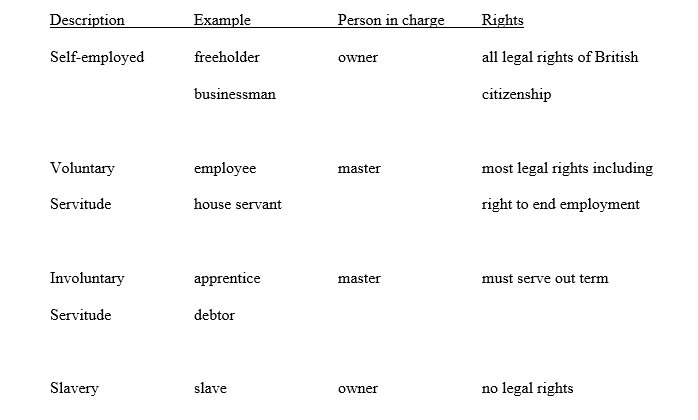
Within the forts and towns that grew on charter land, there were four levels of labor distribution apart from the military.

Table - Descr -Example - Person In Charge - Rights

The first colony, Jamestown, began in 1607. The first black slaves arrived in 1619 and would be used especially in the developing tobacco plantations.

All of the colonies had slaves although the occupations of slaves differed. In southern and middle Atlantic colonies, enormous numbers of slaves were needed for the vast plantations. In New England, plantations were rarely economical because of the poor soil and rougher terrain.

However all colonies used slaves for small farms, household help, personal servants, and skilled labor. In New England, these included indigenous slaves.

The New England states of Massachusetts and Rhode Island were in the business of acquiring and selling African slaves through shipbuilding and slave ship charters.

So, yes, the labor system that included slavery was inherited from the British.


Categories
History

American Slavery: Who Started It?

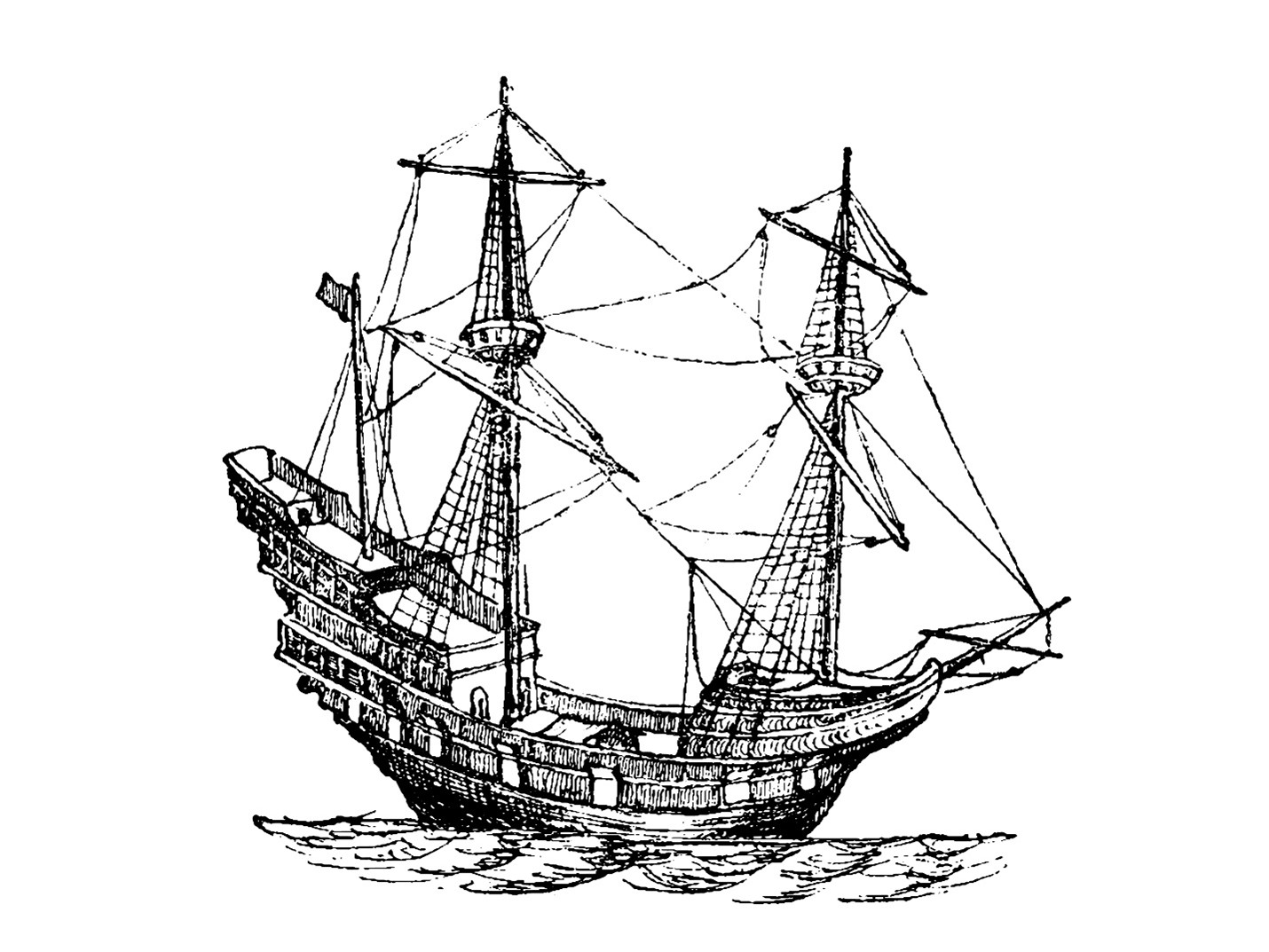
sailing ship

Spain and Portugal fought over the Americas. A treaty in 1494 determined which land belonged to which country, totally ignoring indigenous claims, of course. Portugal was mostly limited to Brazil.

Spain developed the plantation system of agriculture. During this time, the slave route was established. Spanish slave traders made deals with the Yoruba of Nigeria, the Fon of Dahomey, and the Fanti and Shanti of Ghana who already captured slaves through tribal warfare. They were cruel masters whose greed for Spanish trade made slavery into a business.

More slaves died while with the black slavers than died during the dreaded Middle Passage, according to Seabrook. That does not forgive the hideous conditions and abuse on slave ships!

The first African slave insurrection was at Veracruz, Mexico. Between 1570 and 1609, Gaspar Yanga, thought to be a Gabonese prince, led followers from plantation slavery to “star mountain” (the tallest mountain in Mexico) to form an African settlement. In 1600, they were joined by de Matosa’s group of African maroons. Today, a town of 20,000 mestizos still occupies the spot of the settlement. https://www.blackhistoryheroes.com/2011/05/gaspar-yanga-1570-african-slave-revolt.html

This is 78 years after Columbus, and it was not the last resistance.

One more thing: Spanish plantations were planted in Florida in the 1600s and 1700s until Florida became part of the United States of America.

So, I’m wondering why the push for black reparations for slavery is limited to the United States. Why aren’t these African countries included? Why aren’t European countries included in reparations? Is it lack of knowledge? Is it racism that omits reparations from African countries? Or is it greed instead of justice: targeting the USA because she is rich? What do you think?

Categories
History

American Slavery: the European Invasion

The first and second waves of Eurasian immigrants resulted in the First Nations. The first invasion came into Alaska and worked its way down the west coast, deserts and mountains. The second wave came over the Atlantic Ocean and has been found as far west as Minnesota. Both of these originated in Turkey and the Baltic nations, but DNA differs enough to track them. It is possible that these immigrants brought the practice of slavery with them.

As far as we know, the next arrivals were the Vikings. Leif Ericson is said to have followed the directives of Icelanders who had sailed west far enough to spot land, but then returned. If this was during the last ice age, as some hypothesize, the Vikings could also have been directed by sailing south of the ice and by consulting their “sunstones.” https://phys.org/news/2011-11-viking-sunstone-myth.html

We know that Vikings dealt in slavery because slave markets have been found, including a large, active one in Ireland. But if they meant to enslave the Americans, they probably quickly determined that negotiation was the best policy. The Vikings were vastly outnumbered. Their widespread villages did not survive.

We think Christopher Columbus arrived next. Ferdinand and Isabella, his sponsors, were very clear: the inhabitants were to be Christianized and remain free. Columbus was under the authority of the crown, as would be all native inhabitants. Later the monarchs amended the instructions so colonists could require labor and tribute, supposedly to correct reported laziness.

But greed got the better of Columbus. When the king and queen heard of his enslaving and mistreating the Native Americans, they sent a ship to relieve Columbus of his governorship and bring him back in chains.

It was this protection of native inhabitants that forced European colonists to turn to Africa for slaves. They were not the first choice. So much for the anti-black racist argument of slavery.

Categories
History

Ancient and Pre-Columbian American Slavery

manacles

What is slavery? A slave was someone who was owned by another person entirely. Not only was that person considered to be property, but he or she also had no rights at all. Nada. Zip. The slave didn’t even have the right to life. Slavery has been around for a long time and continues to exist today in some nations.

When asked “When did slavery begin?” many people will say it has always been part of human history.

I disagree. Whether you believe in evolution or intelligent design, the human race is traced back to an original family. It is highly unlikely that slavery existed in tight family groups because slavery always enslaves someone who is an “other.”

Even when a group came into an area looking for supplies of obsidian, there does not seem to have been a war, but the groups worked together, although not always equally. It seems that the directing group had more advanced knowledge and arrived later.

There is one early cave drawing that shows two groups of armed men approaching each other. This has been interpreted as a battle scene. However, since we now have proof that man and megafauna lived at the same time (overprinted footprints, spear and arrow heads imbedded in megafauna bones), the picture could just as well be interpreted as a friendly meeting by two groups who always went armed for protection against animals.

When people began to construct city states and enormous structures such as monolithic stone circles (such as Stonehenge, which was not the first), we see suggestions of labor division with overseers and hierarchy, but we don’t know the labor structure.

The earliest mention of slavery that I have found was in the time of Sargon the Great. Some Bible scholars equate him with Nimrod mentioned in Genesis chapter 10. If so, he is described as “a great hunter before the Lord.” Considering the megafauna wandering around, that is saying something!

Jewish lore says Nimrod was a “ruthless leader,” a “merciless ruler,” and the “chief idolater.” Could it be that he believed his own press clippings and morphed into Sargon, who may have been the first to “hunt” men (in terms of warfare, not murder). Someone had to be the first to attack his neighbors.

Sargon conquered an enormous swath of land before he was stopped at the mountain passes of Turkey. We hail him as a great warrior. But if he was first, he attacked people who until then were ignorant of murder on a large scale. He wasn’t great. This was easy pickings. And it was immoral.

Once slavery was conceived, it spread across all of the earth, most likely through trading routes. Only one person successfully stopped it. A Chinese emperor abolished it. But after his death, that was reversed. After all, by now, slavery was considered normal. Indeed, since the definition of normal is “what most people are thinking or doing,” it was normal.

Meanwhile in the western hemisphere many, but far from all, nations and empires adopted slavery. This included nations in the area that today is the United States of America.

Categories
History

Civil War Lies

As a high school student, I found history interesting, but history teachers boring. Lincoln was my favorite president after George Washington. I believed everything I had been taught in class or had seen on television.

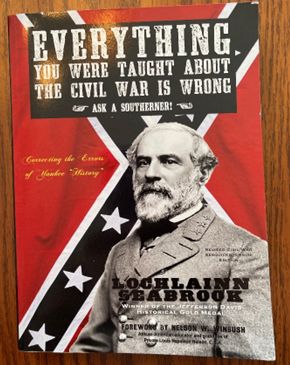
Ten years ago, I found this book:

Everything You Were Taught About the Civil War Is WrongI was not afraid that it would upset my beliefs, and I enjoyed learning other points of view, so I investigated it. The Table of Contents was shocking, if true. The bibliography was extensive: 20 pages of tiny print! There were many southern sources. I had rarely seen southern sources in other history books.

The author had been awarded the Jefferson Davis Historical Gold Medal.

Looking at ratings, I saw they were abysmal, so I looked at comments. They were all rabidly negative. Foaming at the mouth negative. Knowing that nothing is all bad or all good, I recognized a smear campaign. Today, we would call it Cancel Culture.

The smear campaign really stoked my curiosity. I bought the book.

When I read it, I was shocked.

I have fact checked most of the claims in this book and found them to be true. Actually, in some cases, the full truth was even more unpalatable.

They lied to us. But who did it?

As a teacher, I knew that unless you are teaching an area of expertise, you have to trust the book. You don’t have time to do your own fact checking. You expect that the writers have done their job.

As a professional writer, I know that textbooks are usually ghost written, because the “authors” don’t write at a professional level. The ghost writer’s specialty is writing, not the book’s subject. So the writer didn’t lie to us.

The listed authors should be experts related to the book’s subject. Did they lie to us? Lying is such a strong word! It includes untruth, but also the intention to deceive. I don’t think that of the authors. But then they must be ignorant, lazy, or lacking in curiosity. Because the truth is out there. I found it, and I am a self-taught historian, not a professional.

Then who lied to us? Who would gain by a massive propaganda campaign?

You’re not going to like the answer: the Lincoln administration and the nineteenth century Republican Party.