Categories
History

First Federal Intervention with Slavery was the Mason-Dixon Line

Midwest US map

It began long before that. The New England states were, as usual, flexing their power muscles.

The first federal intervention was the Northwest Ordinance of 1787 that established the new territory located northwest of the Ohio Rivers. It established the admission protocol for future states. It addressed the slavery issue by declaring the Territory as free; however a fugitive slave law was also included.

This sounds like a good compromise on paper, but the South was not happy.

The federal government had, for the first time, addressed the slavery question instead of leaving it to the people. This was against the US Constitution’s limitation of powers, as the South saw it.

It also did not like the fugitive slave law. It set a bad precedent.

Most insidious of all, this established a way for New England to expand its power base because all of the future states were already proclaimed free. Future federal senators and representatives of the states would vote with New England.

Categories
History

Emancipation Proclamation was First Large-Scale Emancipation

breakikng chains overhead

That is another lie.

The first large-scale emancipation occurred 1782-1790. It didn’t take a constitutional amendment or federal intervention by a proclamation or a law. Each slave was manumitted by his or her owner without coercion. It was the result of promises to revolutionary veterans, the US Constitution, personal ethics, and state laws.

In 1776, the population of the new United States of America was 2.5 million. More than 500,000 blacks were part of that population, including about 450,000 slaves.

In 1782, Virginia led the charge with the 1782 Manumission Act, which allowed owners to free slaves by will or deed. In contrast, Pennsylvania, Connecticut, New York, and New Jersey implemented gradual emancipation. Notice that each state chose its own course.

Gradual emancipation allowed the development of economic knowledge and work skill mastery that would enable the slave to make a decent living without oversight. Thus, for owners taking advantage of this, they would continue to make income from the slave in the meantime and allow owners to adjust economic realities to a free workforce.

The wave of emancipation ended in 1790. In that census, there were 59,000 free blacks in the United States. Of that, Virginia freed at least 20,000.

Categories
History

The Constitution and the 3/5 Clause

flag next to we the people parchment

The Article of Confederation did not work well. Congress had the power to make rules. However, it had no power to demand funds (only request) from the states. It had no enforcement power and could not regulate commerce or print money.

In May 1787, through the hot summer, and until September 17, rancorous arguments erupted about nearly everything within the shuttered windows of the State House. With delegates sworn to secrecy, the citizens of the new republic waited for news. European nations waited for the collapse of the American experimental government.

What emerged was a document so radical that it was not sent to the state legislatures to ratify, because it required states to give up some of their power, and that never would have passed. Instead, special ratifying conventions were convened in each state. Even then, only 6 states were willing to ratify it. Massachusetts, the last state needed, agreed to ratify the Constitution only with the agreement that it would be amended later. It was with the Bill of Rights.

Some changes were a stronger central government which could regulate commerce, print money, and enforce their laws. It was limited strictly to the list of powers within the Constitution. All branches of the government were equal and ways to balance this were described. The election to congress was a balance between democracy (the House was elected directly by the people) and a republic (senators were nominated by state legislature!)

The argument that is still talked about today, was the disagreement regarding how many House representatives each state should have. The constitution stated one representative for every 30,000 people. The term “people” had been used throughout the Constitution, but in this instance, it translated directly into POWER. Southern states, as can be seen in the excised Jeffersonian section, held the world understanding that, of course, slaves were also “people of the United States.” (Notice, the Constitution does not say Citizens of the United States anywhere except for the members of the central government.) Northerners, determined to limit southern power, refused to count slaves in the assignment of representatives.

The final compromise was to count each slave as 3/5 of a person—but note that it was the northern states that denied personhood to slaves.

That is not what we have been taught.

Categories
History

Articles of Confederation and Slavery

Drafting Articles of Confederation Stamp

The Articles of Confederation enacted in 1777 was the first attempt at a document of self-governance. The federal government would prove to be too weak to be effective.

Today, we can see it in the function (or dysfunction) of the United Nations. Those who do not learn from history are destined to repeat it.

For our discussion on slavery and the Civil War, the most important point of this document is the choosing of the word “state.”

Why did the representatives endorse the use of “state?” Why not province? Or county? Or parish?

Because “state” relates to an independent power, a nation.

The United States of America could be rendered the United Nations of America. This was a political union of nations primarily for defense and diplomacy. There is no mention of slavery.

It is the definition of “state” that underlies the entire “states’ rights” conversation.

Categories
History

Jefferson’s Anti-Slavery Comment Removed!

Declaration of Independence

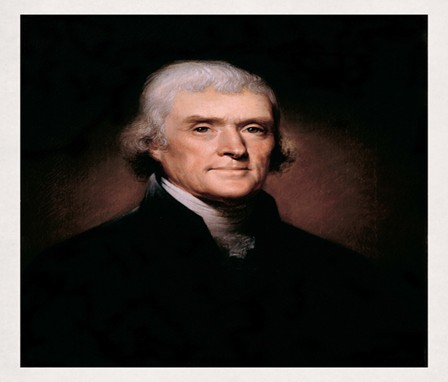
The first draft of the Declaration of Independence written by Thomas Jefferson contained a 168 word section lambasting King George III for slavery in the colonies. Here it is:

“ He [King George III] has waged cruel war against human nature itself, violating its most sacred rights of life & liberty in the persons of a distant people who never offended him, captivating and carrying them into slavery in another hemisphere, or to incur miserable death in their transportation thither, this piratical warfare, the opprobrium of infidel powers, is the warfare of the CHRISTIAN king of Great Britain, determined to keep open a market where MEN should be bought & sold, he has prostituted his negative for suppressing every legislative attempt to prohibit or to restrain this execrable commerce: and that this assemblage of horrors might want no fact of distinguished die, he is now exciting those very people to rise in arms among us, and to purchase that liberty of which he has deprived them, & Murdering the people pon whom he also obtruded them; thus paying off former crimes committed against the liberties of one people, with crimes which he urges them to commit against the lives of another. (Library of Congress)

This didn’t even make it to the whole Continental Congress, only to a select committee. Jefferson said north and south representatives voted to remove it. Apparently, the only states willing to accept it were the Mid-Atlantic States!

Some people jump to the conclusion that it was removed because those states participated in the shipping and sale (north) or use of slaves (south, mostly). They give no support to their opinion. It could also be because the representatives, still hoping for a peaceful separation, felt Jefferson’s language too extreme.

By the way, notice Jefferson’s use of the word “men.” This answers the question of what “men” means in “all men are created equal.”

Categories
History

“All Men Are Created Equal” or Are They?

raised hands before USA flag

There is a great difference of opinion about what the founding fathers meant by this. Did they mean whites are created equal? Or white men, but not women, are created equal? Or did they mean all mankind, regardless of sex and race, is created equal?

Now we know that everyone was not treated equal. We can agree on that.

But what did the phrase mean? We have to look at facts.

  1. Linguistically, “men” and “mankind” were used to include all humans, as well as the more restricted usage of male humans. This was true until recent years. In neither case, was the usage restricted to whites.
  2. Women were active patriots. They did not act as second rank citizens. Abigail Adams exemplifies this in her letter to her husband John Adams wherein she encourages him to “remember the ladies.”
  3. We have to be careful to separate states during the Revolutionary War from the same states during the Civil War. We must stick to the facts.

For instance, three New England states voted for slavery before the first future Confederate state.

Although the south had become the center of plantation business, New England was and would continue to be the hub of the shipbuilding and slavery trades. In fact, Delaware would enter the Civil War as a slave state.

The proof of the difference is what actually happened within the states. The phrase “all men are created equal” already existed in a state constitution: that of Virginia. Yes, Virginia.

The immediate result of the acceptance of this phrase was that during the first twenty years of the USA, tens of thousands of slaves were set free. And Virginia, who freed 10,000 slaves, emancipated more than all other states together.

The reason we look at the first twenty years is because it gave masters time to adjust their lives and businesses to run without slaves, and—just as important—it worked as a period of apprenticeship during which slaves learned trade and economic skills necessary for independent living. After all, there was no free child care, free medical care, free clothes, free food, free care for the elderly and the infirm, free funeral care, and no assured employment.

  1. It is often mentioned that Jefferson wrote the document, and he owned slaves. First, Jefferson was chosen to write the document because he was the best writer, not because of his ethics. The document was a summary of decisions and supporting thoughts of the whole conference. Second, the document had to be written in such a way that all thirteen states would sign it. Third, Jefferson was a very conflicted person. His morals and ethics did not agree. We can see this in the section he wrote against slavery that was omitted in the final version as unsignable.
  2. One of the great impacts on colonial America was the Enlightenment Philosophy, which stressed such items as scientific inquiry, progress, and the rights of man. The American colonists, who were generally more educated as a whole than we are today, discussed these topics, and they are seen in the document. A constitutional republic with its self-rule was progress from traditional monarchies. The Constitution would eventually contain the Bill of Rights. It was the abridgement of these rights of the people that caused the Revolutionary War.
  3. The Christian faith, mostly Protestant but with a significant Catholic presence, affected every household, and it was an active faith, not like today, or like Britain of that time. All colonials learned to read so they could read whatever holy books their faith allowed. All Protestant homes had a copy of the King James version of the Bible, and usually also Pilgrim’s Progress and the Book of Martyrs. Catholics had their missal and often Lives of the Saints.

I make a big deal of this because the document included the phrase “are created.” Created means to be made from nothing, which is definitely not an enlightenment idea. It supports the “intelligent design” theory, although the “evolutionary process” theory was still in the future. And it says “are” meaning that at the day of the document that was still true and was seen as being true in the future.

When I read the word Providence in works of that time, it always refers to the Judeo-Christian God. Remembering that all colonists would need to vote on this eventually, and their representative would need to join an unanimously approval in conference, there is no other way to interpret the word Providence.

The concept of man created by God is the basis of “inalienable rights.” They are inalienable because they come from God, not the government. Especially, not King George III.

God created one man and one woman, according to the Genesis account. In them was the DNA to create the variety of races seen today. Therefore, all are equal. Woman was a “helper meet” for Adam, created from his rib, not his skull or his feet. She was created equal and her job is to “complete” her man. Therefore, equality between the sexes is ongoing. (The concept of male head of house and church is a separate issue, dealing with God’s ongoing use of living samples, not innate qualities and abilities.)

  1. Christianity and the Enlightenment are not natural opponents. Indeed, many easily believed in both. And then there were radicals such as Jefferson who believed they could not co-exist, and his personal version of the Bible proved that he chose Enlightenment over Christianity.

Because they are not opponents, they could claim a created man and also believe in self-government (which is the original government of the Bible) and in progress.

  1. Because of all of this, the best understanding of “all men are created equal” is that that fact already existed, but the current governments needed to progress (actually regress) so reality among mankind met the American Dream of equality (not equity!) of races and sexes. That is, progress would make earthly reality equal heavenly reality.
Categories
History

It Was Illegal to Educate Slaves

Not only was it legal until the Nat Turner rebellion, sometimes the slave was educated with the master’s children. Everyone in the colonies was expected to learn reading so he or she could read the Bible.

Some, who were exceptionally talented, were educated in advanced studies. Each one who stood in the spotlight was a spokesperson for the intelligence and talents of their race.

A case in point is Phyllis (named for the slave ship) Wheatley (her master’s surname.).

Phyllis was a poet so talented that she toured Europe. She was the first American slave, the first person of African descent, and the third American colonial woman to be published.

Her life of 1753-1784 spanned the American Revolutionary War. Here are some of her poems:

  1. On Being Brought from Africa to America: This poem describes her Christian perspective that “everything works together for good to those who love God and are called according to His purpose.” She doesn’t like enslavement, but credits her abduction with learning about the Christian faith and how to get to heaven.

“Remember, Christians, Negros, black as Cain,

May be refined, and join th’ angelic train.”

  1. To the King’s Most Excellent Majesty. 1768: This poem expresses loyalty to King George III and appreciation for the good things he does, especially the recent repeal of the Stamp Act.
  2. To the Right Honourable William, Earl of Dartmouth, his Majesty’s Principal Secretary of State of North-America, &c: In this poem, she expresses hope that Dartmouth will be kinder and fairer than his predecessor. She relates her slavery to the experience of the colonists that has hopefully now ended.

…That from a father seiz’d his babe belov’d:

Such, such my case. And can I then but pray

Others may never feel tyrannic sway?

  1. His Excellency General Washington: “Proceed, great chief, with virtue on thy side…”

After publication of her first book, she was set free. She married a free black man. They had three children who seem to have died in infancy. They were always dirt poor. Her husband at one time occupied a cell in a debtor’s prison.

Categories
History

American Slavery Ended with the Civil War

flag behind scales of justice statue

This is another example of twisting truth.

By 1772, all of the thirteen colonies embraced slavery legally. Massachusetts was first. Virginia was fourth, and the first southern state to legalize it.

The legality of slavery was exploded by the 1772 British law case of Somerset vs Steuart. https://www.english-heritage.org.uk/visit/places/kenwood/history-stories-kenwood/somerset-case/

Based on a case during the Elizabethan era, it was argued that slavery could not exist under the Magna Carta provision of habeas corpus. The ruling was that there was no basis for slavery under British common law and, therefore, slavery could not be enforced. However, slavery was not abolished at this time because it was directly addressed by this case.

The effect in the American colonies was explosive, since they operated under British law. Because slavery was unenforceable, laws related to it had to be revised or it would cripple the plantation system and even smaller businesses.

The revision changed slavery as practiced in the American colonies from the labor category of “slavery” to “involuntary servitude.” Thus, prior slaves were equivalent to apprentices, except that their term of service was lifelong and hereditary.

Prior slaves had been often treated as servants already in many households complete with the legal rights. Like apprentices, however, the rights were limited to the permission of the master.

The language difference was important. People who wanted to demean blacks still talked in terms of owners and slaves, even niggers. Slavery continued to be used in casual conversation and even in courts for convenience and clarity.

But in genteel southern households, as well as northern ones, the previous slave was called a servant. The plantation owners did not own slaves, they owned the land. He was the master of servants—like the master of an apprentice.

I was taught none of this in school. Were you?

Categories
History

Slaves Were Whipped Mercilessly

whip

Were slaves whipped? Sometimes. So were sailors, students, and children.

During the days of the British colonies in America, whipping was not considered a “cruel and unusual punishment.” Indeed, that phrase did not exist.

Whipping was a moderate measure compared to the medieval penalties dealt out for capital offenses, such as being drawn and quartered or having limbs pulled apart by four horses.

The British Whipping Act of 1530 https://www.britannica.com/topic/flogging was still in force during colonial times. It authorized whipping for theft, blaspheming, poaching, and other minor offenses. Both men and women were whipped, including the insane.

So, you see, during the Antebellum and Civil War Periods, most people upheld the practice of whipping if used judiciously. Judicious use included being limited to a minor offense, by using an appropriate instrument (not the cat-o’-nine-tails), and by limiting number of lashes.

However, abolitionists made spectacular displays of escaped slaves with whipping scars as a way of convincing northerners that slave owners in the south whipped all slaves mercilessly. They omitted the fact that runaway slaves were overwhelmingly slaves of cruel masters.

In fact, many plantation owners did not whip slaves—or anyone else—at all.

As to merciless whipping, the DVD series North and South did a wonderful job of pointing out that men who were cruel to slaves were just bad men. They were cruel to everyone in their power.


Categories
History

British Colonial Slavery

British Flag

During the Civil War, Confederates cried defensively, “Plantation slavery isn’t our fault. We inherited it from the British!”

So, what did Britain contribute to slavery in the United States?

One thing was its system of labor. All land discovered, explored, and claimed in the name of the British monarch belonged to the reigning king or queen. Favored gentlemen were granted royal charters to develop great swaths of land. This was usually in agriculture or mining precious metals or gemstones.

Within the forts and towns that grew on charter land, there were four levels of labor distribution apart from the military.

Table - Descr -Example - Person In Charge - Rights

The first colony, Jamestown, began in 1607. The first black slaves arrived in 1619 and would be used especially in the developing tobacco plantations.

All of the colonies had slaves although the occupations of slaves differed. In southern and middle Atlantic colonies, enormous numbers of slaves were needed for the vast plantations. In New England, plantations were rarely economical because of the poor soil and rougher terrain.

However all colonies used slaves for small farms, household help, personal servants, and skilled labor. In New England, these included indigenous slaves.

The New England states of Massachusetts and Rhode Island were in the business of acquiring and selling African slaves through shipbuilding and slave ship charters.

So, yes, the labor system that included slavery was inherited from the British.